
Ashesh Prasad Mitra
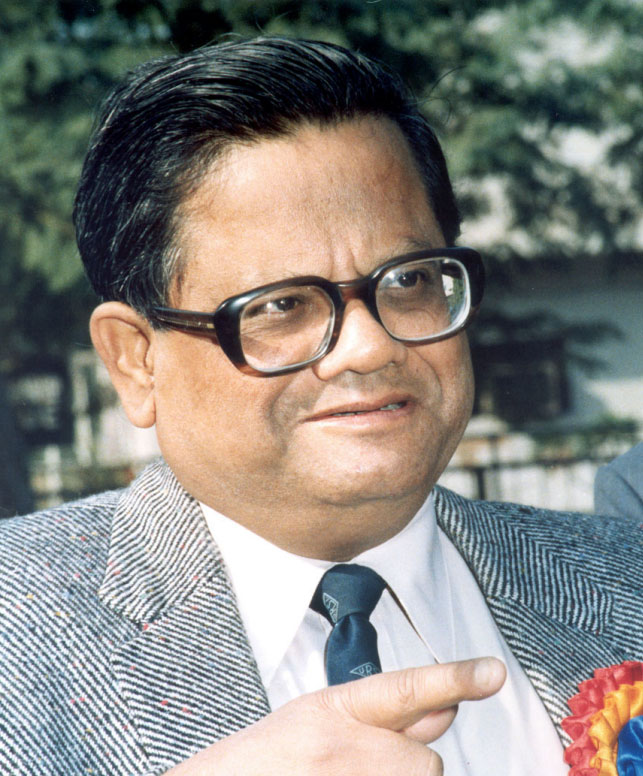
Ashesh Prasad Mitra, popularly known as A.P. Mitra, was an internationally renowned climate scientist who carried forward India’s post-independence vision of using science for development. He did pioneering work on the ionosphere and climate change. He was the first scientist to take up the cudgels against the US Environmental Protection Agency (US-EPA) for their flawed data on methane generation in Indian rice fields. In the early 1990s, the US-EPA had come out with a report incriminating Indian rice fields of emitting 38.6 million tonnes of methane per year and thus adding significantly to global warming. Mitra initiated pioneering measurements of methane emission from paddy fields which showed that Indian rice fields actually emitted just about one tenth of the estimates made by US-EPA and that it was the carbon emission from developed countries of the West that was responsible for global warming. He catalysed several inter-disciplinary studies on climate change and its impacts on various sectors like agriculture, health, water, etc., in India.
Prasanta Chandra Mahalanobis
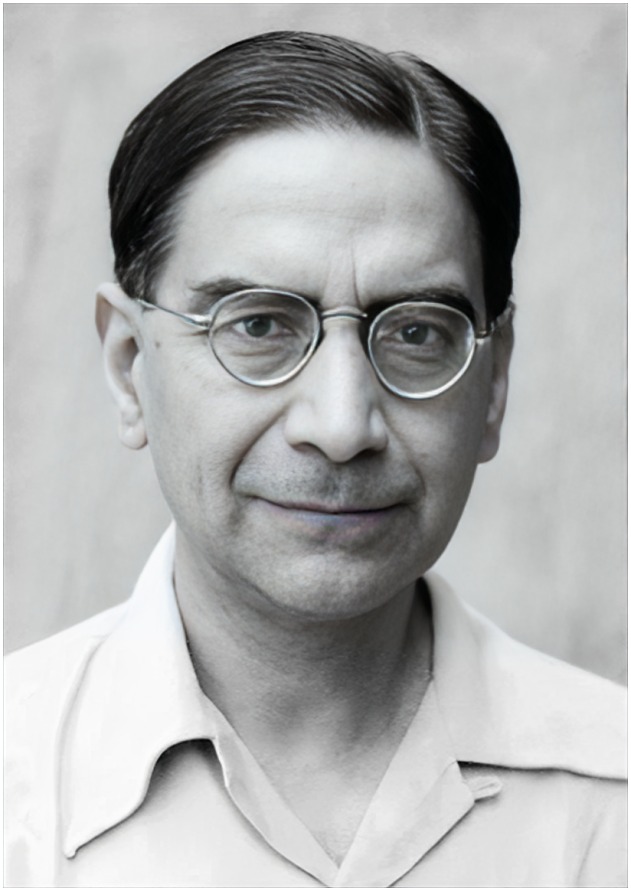
Prasanta Chandra Mahalanobis (29 June 1893 – 28 June 1972) was a scientist and applied statistician who did pioneering research on large scale sample survey and introduced D2 statistic, a new statistical measure, known today as the ‘Mahalanobis distance’. A number of statistical techniques introduced by Mahalanobis are now integral part of modern analytical tools and find innumerable applications in interdisciplinary research. He played a key role in national planning during the early phase of independent India. He founded the Indian Statistical Institute, one of the oldest and most prestigious institutions focussed on statistics.
Biresh Chandra Guha

Biresh Chandra Guha (8 June 1904 −20 March 1962) was active in India’s struggle for freedom even as he was engaged in pioneering work on the biochemistry of vitamin C, ascorbic acid biosynthesis the B-vitamins, food and nutrition. He established biochemistry as a separate discipline in India and gave rise to the Central Food Technological Research Institute (CFTRI) of the Council of Scientific and Industrial Research (CSIR), Mysore.
Jnan Chandra Ghosh
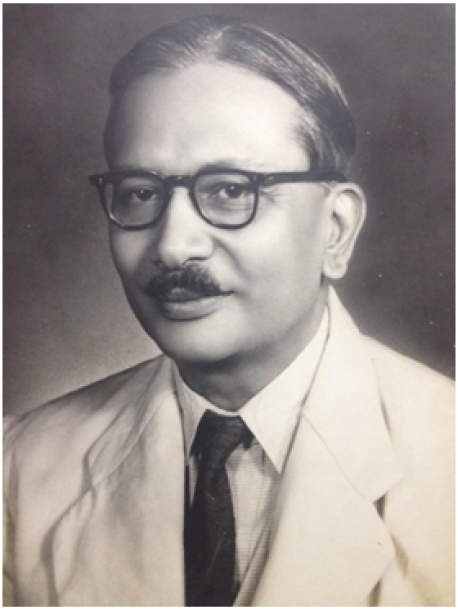
Jnan Chandra Ghosh (4 September 1893 −21 January 1959) was a pioneer of physical chemistry in India. He is best known for his research on the theory of strong electrolytes. His theory, which was designed to account for the abnormality of strong electrolytes, was proposed in 1918. His work led to the universal acceptance of the hypothesis of complete dissociation of strong electrolytes. This work brought appreciation from all across the world. This included a commendation from such scientists as Walther Hermann Nernst, Max Planck, William Lawrence Bragg, and Gilbert Newton Lewis. Nernst cited this in his famous book Theoretical Chemistry. Ghosh’s work was written about in Lewis and Randall’s book, Thermodynamics. Peter Debye and Enrich Huckel developed a suitable theory of strong electrolytes only on incorporating Ghosh’s observations. Debye’s concept of ion atmosphere is essentially an extension of the postulates of Ghosh. The other areas in which he made significant contributions were kinetics, fluorescence, catalysis, auto- oxidation, and other allied branches.
Sambhu Nath De
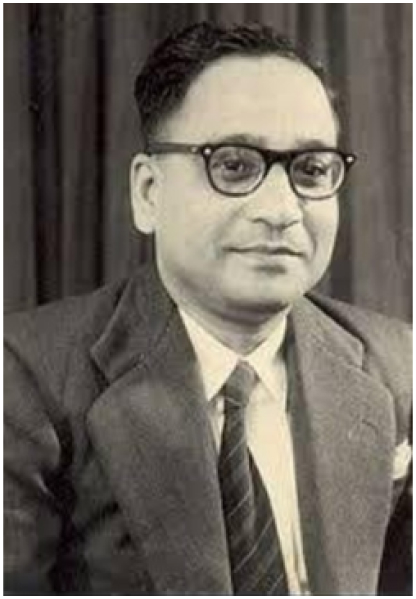
Sambhu Nath De (1 February 1915 – 15 April 1985) was a pathologist whose path- breaking research revolutionised our understanding of the killer disease cholera. It was his extraordinary experimental skill and keen observation that helped him successfully elucidate the mechanism of action of the cholera toxin. In less than a decade (1952 – 1959) of investigations he discovered the cholera toxin. This was however after almost three- quarters of a century following Robert Koch’s first culture of Vibrio cholerae (known as comma bacillus at that time) and 105 years after the epidemiologic studies of John Snow, a British physician describing the water-borne nature of the disease.
Asima Chatterjee
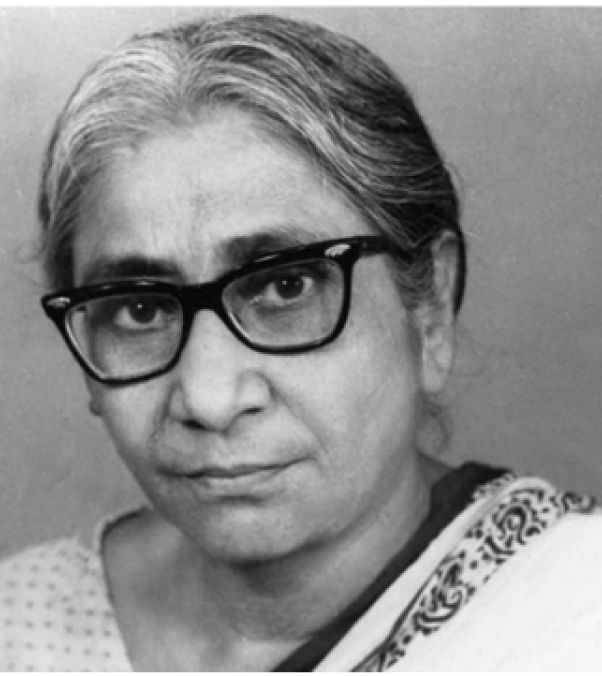
Asima Chatterjee (23 September 1917 −23 November 2006) was a pioneer woman scientist of India. She is best known for her significant work in the field of natural products, especially alkaloids, coumarins and terpenoids derived from Indian medicinal and other plants. Her pioneering work on indole alkaloids made a considerable impact on subsequent research in this field in India and abroad. She was the first woman to receive the Doctor of Science (DSc) degree (which she received in 1944 from the Calcutta University) from an Indian University. She is also the first woman on two other counts; occupy a Chair in an Indian university; serve as the General President of the Indian Science Congress (1975). Her research career spanned more than five decades. She published over 350 research papers in Indian and foreign journals and guided over 50 Ph.D. students. Her works are widely quoted, and some elements are embedded in textbooks related to her fields of work. She established a school of natural products chemists in India.
Upendranath Brahmachari
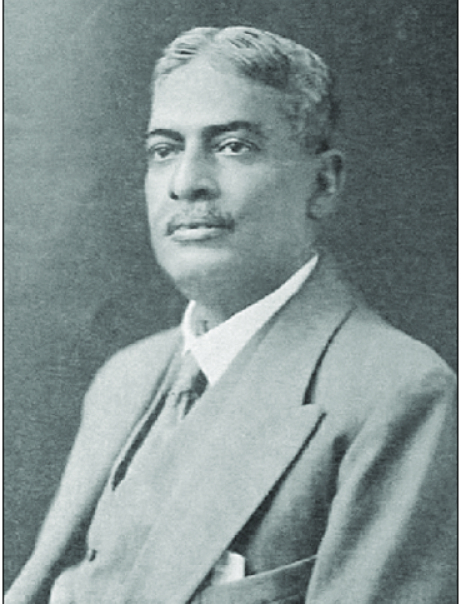
Rai Bahadur Sir Upendranath Brahmachari (7 June 1875 – 6 February 1946) was a scientist and medical practitioner. He dedicated his life to science; in particular to chemistry, biochemistry and medicine. His abiding contribution to healthcare was the discovery of the chemical urea stibamine to treat kala-azar −an almost always fatal form of leishmaniasis. Leishmaniases are diseases caused by the protozoan parasite Leishmania sp. The infection is transmitted to humans by the bites of bloodsucking flies known as sandflies. There are three main forms of the disease−one of which is visceral leishmaniasis or kala-azar. Even today, untreated kala-azar is the second largest parasitic killer in the world. In the early twentieth century, it infested and decimated entire villages. With urea stibamine, doctors had a chance to fight back; it was also a powerful prophylactic. In the words of the British doctor H.E. Shortt, “…overnight, a death rate of 90% was transformed into a cure rate of 90%.”
Satyendra Nath Bose
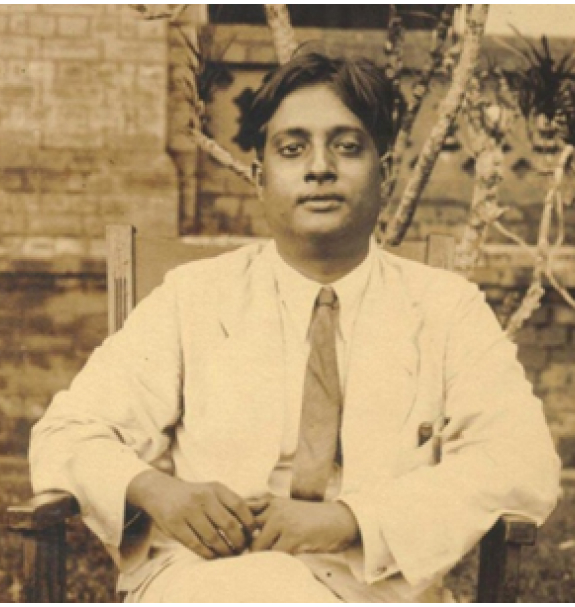
Satyendra Nath Bose (1 January 1894 −4 February 1974), popularly known as S.N Bose, belonged to a rare breed of Indian scientists who made fundamental contributions to the world of science. Bose was a mathematician and physicist of the highest calibre. His pioneering efforts, appreciated and further developed by the great Albert Einstein, led to the system of statistical quantum mechanics, now known as Bose-Einstein Statistics. His contribution to the Unified Field Theory, which he studied three decades later, could have been equally spectacular. But Bose, saddened by his “Master” Einstein’s demise in 1955, whom he was planning to meet during a scheduled European trip, tore up the only available manuscript.
Jagadish Chandra Bose
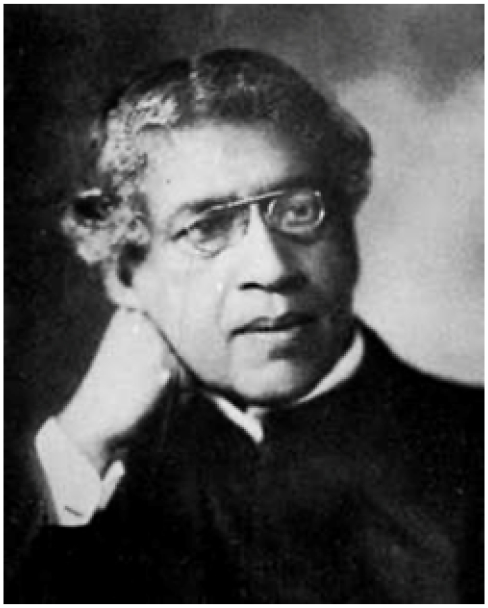
Jagadish Chandra Bose (30 November 1858 – 23 November 1937) occupies a unique position in the history of Indian science. He was modern India’s first physicist. As one of his biographers, Subrata Dasgupta writes: “Bose was the first Indian to be admitted in person to the sanctum sanctorum of English, thus Western science.” In 1897, Bose was invited to deliver a lecture at the Royal Institution in London, then the most prestigious and visible platform that announced discoveries. It was Michael Faraday who started the Friday Evening Discourses in 1826.